
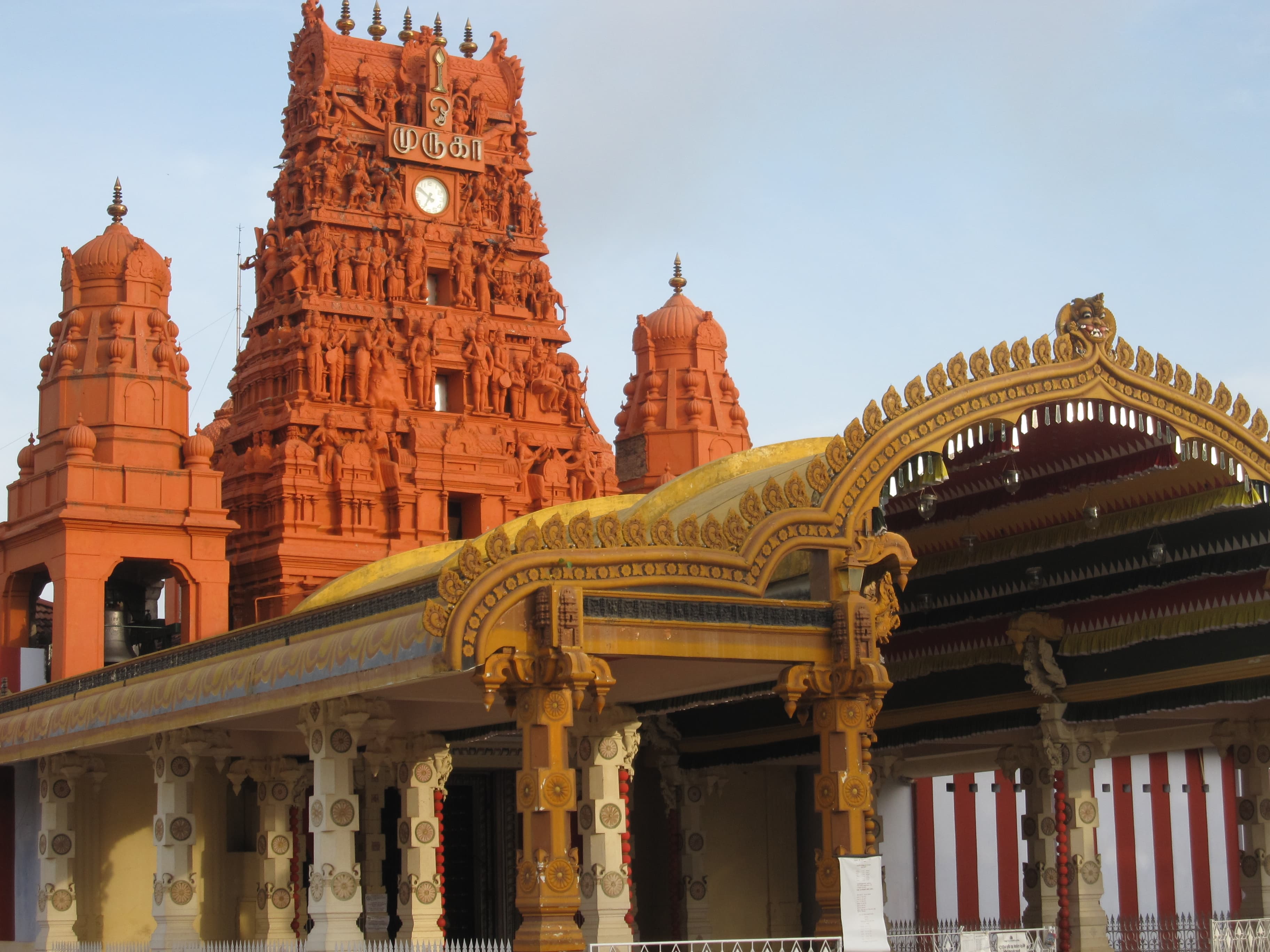
Nallur
Sangiliyan Thoppu (King's Arch)
The standing archway of the last royal compound of the Jaffna Kingdom — a small, weathered fragment a short walk from Nallur Kovil.
Year-round; early morning or late afternoon for soft light on the laterite
Best time to visit
Open site, accessible during daylight hours
Opening hours
Free
Entrance fee
Sangiliyan Thoppu is the surviving gateway of what is traditionally identified as the royal compound of Cankili II — Sangili Kumara Pararajasekaram — the last king of the Jaffna Kingdom. The kingdom fell in 1619 when the Portuguese took the city, deposed Cankili, and shipped him to Goa, where he was executed the following year. The arch and a handful of related fragments at Nallur are what remains above ground of a four-century Tamil polity that ruled the peninsula from the thirteenth century onward.
The structure itself is modest: a single laterite-and-coral archway with a corbelled top, set in a small fenced enclosure off the road that runs north from Nallur Kandaswamy Kovil. The masonry is weathered to a pinkish-grey and the original lime plaster has long since gone. Local oral tradition treats the site as the eastern gateway of the inner palace; the precise dating and function are matters that historians and the Department of Archaeology continue to discuss.
What gives the arch its weight is its company. Nallur Kovil — built on the site of the old royal temple — is a five-minute walk south. Mantri Manai, the so-called Minister's House, is a few hundred metres further on. The Yamuna Eri tank, the Sattanathar shrine, and several smaller archaeological markers are within the same quiet square kilometre. Walked together in a morning, they outline the ground plan of the vanished capital more clearly than any single monument can on its own.
The site is open ground rather than a managed monument. There is no ticket office, no interpretive panel beyond a small Department of Archaeology notice, and no guide stationed on site. Pair it with the kovil and Mantri Manai for a self-guided Nallur heritage walk; allow about twenty minutes here and longer if you are reading or photographing closely.
The neighbourhood around the arch is residential and quiet. Approach respectfully, do not climb on the masonry, and ask before photographing local residents who may be passing through.
What to know
Visiting quietly
- Best season
- Year-round; mornings and late afternoons for the best light
- Etiquette
- An archaeological site in a residential lane — do not climb the masonry, keep voices low, and ask before photographing neighbours.
- Getting there
- 10 minutes by tuk-tuk from Jaffna town centre; 5 minutes' walk from Nallur Kandaswamy Kovil
A closer look
Location
On the map
Featured in these tours
Visit on a curated journey

Practical things
Frequently asked
Who was Sangiliyan, the last king of Jaffna?
What was the Jaffna Kingdom?
Is there much to see at Sangiliyan Thoppu?
Planning a visit to Sangiliyan Thoppu (King's Arch)?
Begin a quiet conversation
Enquire about an Abiholiday villa nearby and Abi will help you plan your trip to the North.
We reply within 24 hours, usually within a few hours.Your enquiry comes straight to Abi's inbox.