
Tellippalai
Tellippalai Durga Devi Temple
An ancient goddess shrine on the road to Keerimalai — one of the principal Shakti temples of the Jaffna peninsula.
November to March; or during Navaratri in September–October
Best time to visit
5 a.m. – 12 p.m. and 4 p.m. – 8 p.m. daily
Opening hours
Free; donations welcomed
Entrance fee
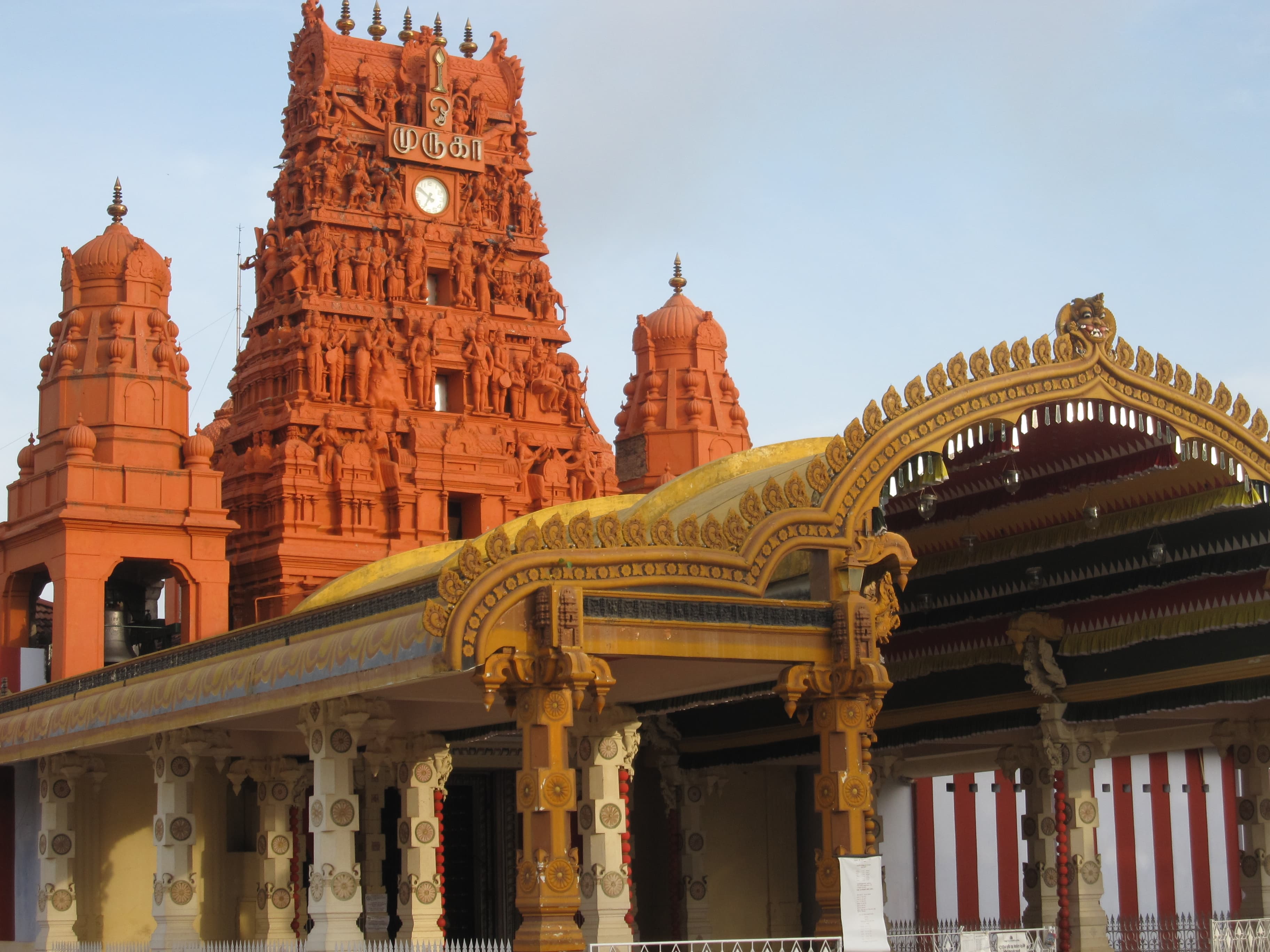
Tellippalai Durga Devi Kovil stands in the small town of Tellippalai, on the main road between Jaffna and the northern coast, about ten kilometres from the centre of Jaffna. It is one of the principal Shakti temples of the peninsula, dedicated to Durga in her warrior form — the goddess seated on the lion, eight-armed, holder of the sword, conch, and discus. Within the wider Shakta geography of Sri Lanka, Tellippalai is grouped alongside Nainativu Nagapooshani and the Veerasingam Vairavar Kovil at Vannarpannai as a major site of devotion to the goddess.
The temple has a long recorded history, with references in the Yalpana Vaipava Malai — the eighteenth-century Tamil chronicle of the Jaffna Kingdom — to a Durga shrine at the same location. The precinct as it stands today is a sequence of nineteenth and twentieth-century rebuildings on an older foundation. The temple suffered damage during the civil conflict and was substantially restored in the years after 2009; the current rajagopuram, with its layered painted figures over the eastern entrance, dates from this restoration period.
The inner sanctum holds Durga Devi in the standing form, with subsidiary shrines for Ganesha, Murugan, Bhairava, and the navagraha. The temple operates on the standard Saiva pooja schedule of six offerings a day, with the early morning and dusk poojas the most attended. Fridays — auspicious to the goddess — and Tuesdays draw the largest weekday congregations, and the temple has a particular reputation as a site for prayers connected with the protection of children, married life, and the resolution of long-standing difficulties.
The principal annual observance is Navaratri — the nine nights of the goddess, in the Tamil month of Purattasi (September–October) — when the temple is illuminated each evening, abhishekam is performed at length, and the deity is dressed in nine successive forms across the nine nights. It is one of the more atmospheric festival observances of the peninsula. The Aadi month observances in July–August also draw large numbers, particularly on Tuesdays.
For the visitor on the northern coast circuit, Tellippalai is a natural pause between Maruthanamadam Anjaneyar Kovil and the Keerimalai–Maviddapuram cluster. Twenty minutes is enough for a circumambulation and a quiet darshan at the sanctum. Tellippalai itself is also useful as a coffee and short-eats stop on the way back to Jaffna town — the small bakeries along the main road are old and reliable.
What to know
Visiting quietly
- Best season
- November to March; or during Navaratri in September–October
- Etiquette
- Cover shoulders and knees. Shoes off at the outer gate. Men typically remove shirts before the inner sanctum; women cover legs. No photography inside the sanctum.
- Getting there
- 25 minutes from Jaffna town by road
A closer look
Location
On the map
Featured in these tours
Visit on a curated journey
7-8 hours
Northern Coast Temples, Springs & Beaches Tour
A full-day private coastal route linking sacred kovils, sea springs, Buddhist heritage, quiet beaches, and the northern shoreline.
See the tour →
4-6 hours
Private Jaffna City, Temples & Local Life Tour
A gentle, story-rich introduction to Jaffna through temples, markets, colonial history, Tamil culture, and local food stops.
See the tour →

Practical things
Frequently asked
Who is the principal deity at Tellippalai?
When is Navaratri at Tellippalai?
Can non-Hindus visit Tellippalai Durga Devi Kovil?
Planning a visit to Tellippalai Durga Devi Temple?
Begin a quiet conversation
Enquire about an Abiholiday villa nearby and Abi will help you plan your trip to the North.
We reply within 24 hours, usually within a few hours.Your enquiry comes straight to Abi's inbox.